It’s no secret that motherhood is life-changing. It shifts your identity, priorities and relationships, and brings about new stressors—and, of course, new love. But is there an ideal time in life to become a mom? A time when women have the emotional, financial and professional foundation, along with the energy to carry and care for a little one? For many women, that time changing.
The average age of a first-time mom in the U.S. has been rising for decades. The current average—nearly 28—is a record high, but even that is quite young when looking at other trends. About 20% of women in the U.S. now have their first child after age 35. And according to recent data from the CDC, more women than ever are babies in their 40s.
“There is no rule that once you hit 40 that you are ‘too old’ to be a parent,” says Emily Morehead, a licensed professional counselor and co-owner at The Couch Therapy in Allen. Morehead, also a PhD student researching perinatal mental health, says women are letting go of expectations of what middle-age is “supposed to look like.” Plus, advancements in assisted reproductive technology are making motherhood later in life a possibility for more women.
Still, there can be roadblocks. As women age, fertility naturally declines, with this gradual decrease beginning around age 32. Women over 40 have just a 10-15% likelihood of getting pregnant in a given cycle, and by 45, that often drops below 5%, explains Dr. Leen Al-Hafez, an assistant professor in the Department of Obstetrics and Gynecology at UT Southwestern Medical Center in Dallas who specializes in maternal-fetal medicine. “While there are exceptions, spontaneous conceptions that lead to live births are rare for women over 43,” she says.
There are risks, too. For women these include an increased risk of miscarriage, gestational diabetes, pre-eclampsia and C-section. And babies of moms over 40 may have a higher risk for chromosomal or genetic abnormalities, as well as preterm birth, which can lead to various health challenges.
Yet when it comes to maternal mental health, there are no increased risk factors for perinatal mood disorders an individual in their 40s versus in someone in their 20s or 30s, says Morehead. In fact, women in this age group may be more likely to seek treatment because they have more experience hearing the perspectives of other women and their motherhood journeys.
Despite any risks, Al-Hafez says most women in their 40s have favorable outcomes, and notes that there are several benefits, both medically and emotionally, to pregnancy and parenthood after 40.
“Later-in-life parents have lived experiences in managing life stressors, emotional regulation and may have built a community of resources, all which lead to supporting the balance of motherhood,” Morehead agrees. “Parents who start their parenthood journey in their 40s may experience gratitude for the here and now moments of parenthood because of their journey to parenthood.”
Having children in your 40s can be rigorous and rewarding in the ways that all parenting is, but it also comes with unique journeys and challenges. We talked to five local women who became mothers at 40 and beyond. Here are their stories.
Sarah Heath, Mom at 41
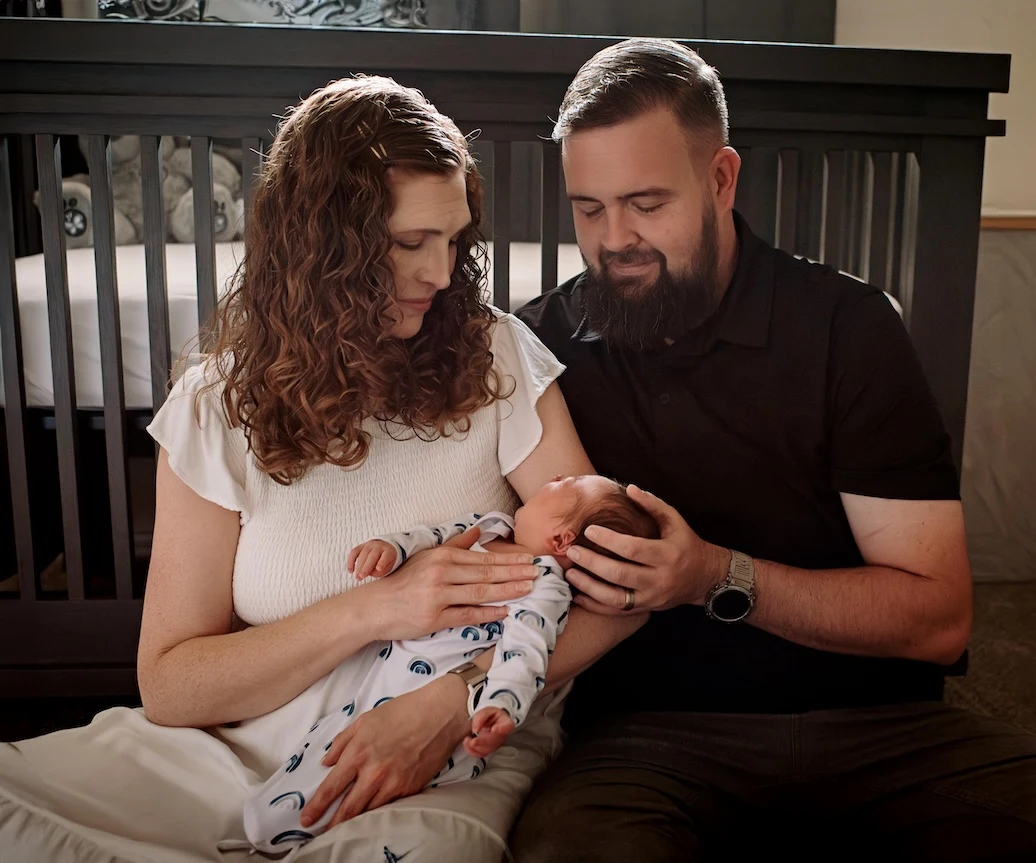
When Sarah Heath married her husband Carl at age 35, she was in no real rush to start a family. The two wanted to settle in and build a foundation before having a baby, something she looks back on with gratitude and grief. At age 38, Heath lost her first baby, a girl named Olivia, at 20 weeks. She then turned to in vitro fertilization (IVF)—three rounds with no success.
As she crept up on 40, Heath wanted “off the rollercoaster” and began to think of her options for starting a family: an egg or embryo donor, fostering, adoption. Then finally, after a fourth round of IVF, she got pregnant with a healthy baby girl.
Heath welcomed her daughter at age 41. “Because of the journey we went through, it has shaped us as parents and it’s going to shape how we parent her,” she says.
There are times when Heath, who lives north of Dallas, looks back and wishes she had tried for a baby a little earlier. Pregnancy and parenthood is physically taxing, especially as you get older, she says. But emotionally, she’s stronger now. “I think that there is great value in having more confidence in who I am at this age … I have a better understanding of what really matters, and what doesn’t matter as much, so I don’t get caught up by the little things like might have done in my 20s.”
Amanda Enberg, Mom at 42
Hiring a doula to help her through childbirth, researching delayed cord clamping and newborn health. If Amanda Enberg had had a baby in her 20s, she’s certain she wouldn’t have made these priorities. But at 42 she says, “I know enough to know if I don’t know enough, and I know what I need to research.”
It’s one of many ways that Enberg, of Dallas, looks at parenthood differently than she would have earlier in life. A divorce, a cross country move, and experience with loss add up to decades of life lessons that she says make her “more patient, grateful and understanding” as a mother.
Enberg always wanted to be a mom and suffered two miscarriages in her 30s. As she rounded up on her 40th birthday, she began to accept that motherhood might not be in her cards. With a focus on their own future, she and her husband, Travis, decided to take control of their health—losing weight, seeing specialists, taking vitamins and supplements.
Then suddenly, after a whirlwind of life changes, she was pregnant at 41. “It was sort of like, ‘Oh, I don’t know when that happened. It was really exciting and it was a really big shock. We had kind of resigned to the fact that it might not happen.”
Enberg says the benefits of becoming a mom later in life so far outweigh the downsides. She’s more confident, financially stable, and has all those extra years of perspective. Still, there are some challenges. “My body,” she laughs.
Angie Gettys, Mom at 41
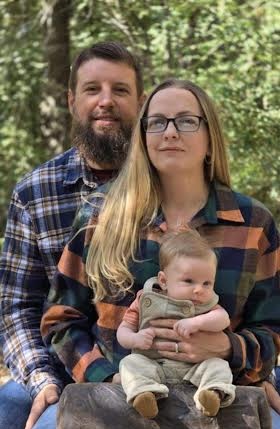
“It’s completely different than what I expected,” Angie Gettys says of motherhood. “I love it, I enjoy it, but it’s been really hard. At 41 years old you’ve had this whole life, and then absolutely everything changes.”
Gettys is being treated for postpartum depression after having her son Hunter a few months ago. The Rowlett mom believes the adjustment to parenthood is harder at her age than it might have been when she was younger because of the decades she lived as an adult in charge of only herself.
Gettys never longed to be a mother. In her 20s and 30s she felt if it happened it happened—and when it didn’t, she wasn’t dejected. Then, at 40, she got a big surprise: She was pregnant. “I was more scared than anything. Being older, I worried about what people would think. Everyone I went to school with has kids that are much older, so I thought about the social aspect of it,” she says.
Gettys and her partner, Kris, sometimes joke they’ll be “like the grandparents at Hunter’s graduation,” but overall, she’s glad motherhood came when it did. “I was able to enjoy being young, travel,” she says. “I was always go, go, go. Having to slow down isn’t a bad thing, but it’s an adjustment.”
Jean Fowler, Mom at 41
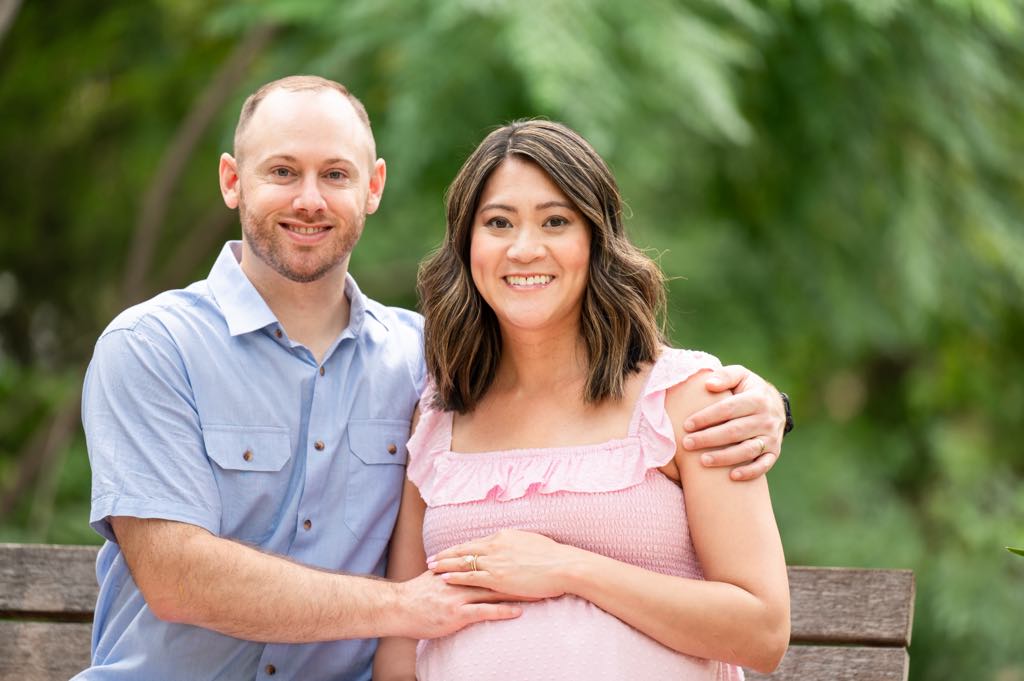
Jean Fowler always knew she wanted to be a mom, but she also knew that chapter might come later in life. A trauma surgeon, she didn’t finish her residency until she was 31. And as she worked through her 30s to establish her career, dating, marriage and family weren’t top of mind. So at 35 she froze her eggs.
At 39, Fowler got married and six months later she conceived naturally, then miscarried. Ready for a family and feeling the clock ticking, she turned to IVF but found no success there.
Then at 40, Fowler naturally got pregnant again. It was exciting and unnerving. As a physician, she knew the risks and statistics. So through most of her pregnancy she held her breath and prayed.
Fowler, of McKinney, welcomed her daughter in September at age 41, the right time for her both personally and professionally. “I’m not worried about my career, I’ve already had the chance to start it, get where I wanted. I don’t feel like I need to prove myself,” she says. “And my own personal growth—I think of myself when I was 30 and where I am now, and I’m a much more secure and confident woman. I have a lot more to give.”
Fowler would love to have another baby but says she has to be realistic—she’d be 43. “It’s all the same fears again—the genetics, am I physically fit enough? You question everything,” she says. “It’s all out of my hands. This journey has taught me there’s actually very little in life you can control.”
Carmen L., Mom at 45
Carmen never expected to be a new mom at 45, time just got away from her. The Burleson resident, who asked not to use her last name, got married at 35 and then moved around with her husband for his job. “It was one of those things where we were like, ‘We can wait, we have time.’”
But at age 40 Carmen was shocked to learn she was in menopause and was devastated when a fertility specialist told her she had no follicles. After coming to terms with the fact that she wouldn’t be able to have a genetic child of her own, she started to look into her options. She decided to use a donor egg.
“I feel I enjoyed it more now than I would have had I been 20 or 21,” Carmen says of her pregnancy. “Knowing all the things I went through, the struggles, to be able to carry myself just felt a little more special.”
Carmen says it’s difficult not to have a circle of friends her age with babies but feels grateful to become a mom at a time in life when she has perspective and patience. She’s intentional in her parenting and the way she interacts with her daughter, something she says comes with age.
But looking back, Carmen is frustrated that fertility isn’t talked about it more. “I don’t remember being told you should check your follicles after 32, or you should test your AMH levels after a certain age. You do everything society tells you to do—go to college, get married, etc., then you decide to have a baby, and you can’t,” she says. “Women need to be better about educating ourselves; advocating for ourselves and our health.”
This article was originally published in December 2024.
Top image of Amanda Enbery; courtesy of Archer + James Photography