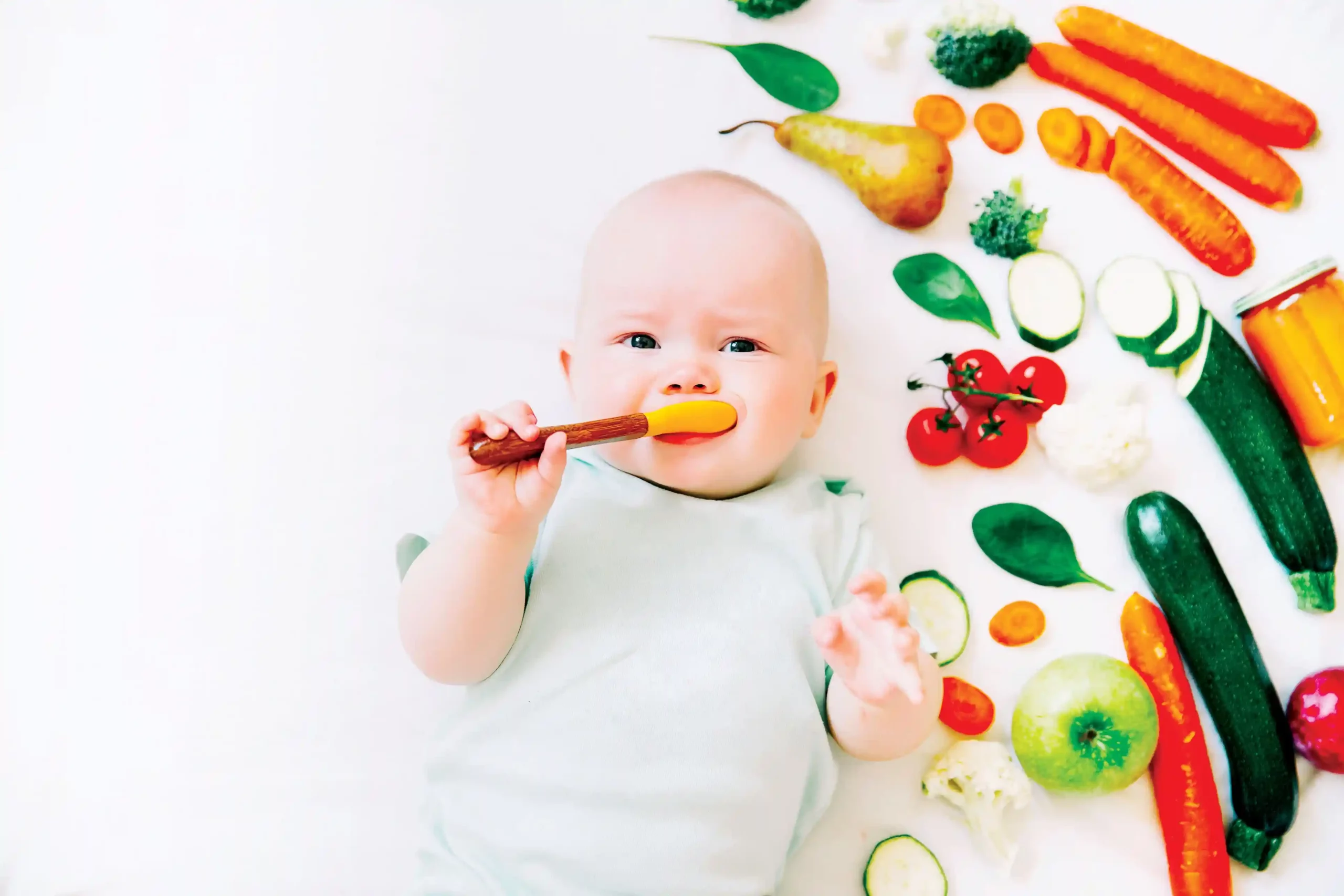
There are many firsts parents look forward to in the lives of their babies—those precious milestones like rolling over, their first tooth or learning to crawl and walk. But when it’s time to introduce potential food allergens for the first time, it’s easy to worry. Which foods should you start with and at what age? What are the signs of an allergy, and is my baby at a greater risk?
For many years, experts thought the best way to prevent serious food allergies like a peanut allergy was to avoid those products in the first years of life, but that’s no longer the case. In fact, studies show that introducing common allergens like peanuts, dairy, eggs and even fish early on actually lowers the chances of your baby developing food allergies, and waiting too long could increase their risk.
To help you navigate this process, we’ve teamed up with pediatric allergists and a certified nutritionist to give you expert tips and handy advice, making this journey as safe as possible.
Food allergies on the rise
As many as 1 in 13 children has food allergies, according to the Centers for Disease Control and Prevention. There’s an upward trend, with a staggering 50% rise in childhood food allergies from 1997 to 2011, followed by another 50% surge from 2007 to 2021. Shockingly, the number of children with peanut or tree nut allergies has more than tripled between 1997 and 2008. Any food can potentially trigger an allergy, but these are the nine most common culprits:
• Peanuts
• Tree nuts
• Cow’s milk
• Eggs
• Soy
• Wheat
• Sesame
• Fish
• Shellfish
Why some babies are more at risk
Some children are more susceptible to allergic conditions. This genetic predisposition, known as atopy, significantly raises the likelihood of developing allergies. Dr. Drew Bird is the director of the Food Allergy Center at Children’s Health in Dallas and a professor and interim Chief of Allergy and Immunology at UT Southwestern Medical Center. He says, “A child may be at a higher risk if there is a family history of allergies or if eczema develops in the first few months of life.”
The National Institutes of Health reports that just 12% of kids whose parents don’t have allergies will develop allergies themselves. However, if one parent has allergies, the risk jumps to 30–50%. With both parents affected, it skyrockets to 60–80%. Birth order may play a role too. Being a second child or later, and having siblings, can slightly lower the risk of atopic dermatitis and food allergies.
Previously it was believed that pregnant women could shield their babies from developing allergies by avoiding certain foods, but nothing has been proven that steering clear of highly allergenic foods during pregnancy will reduce the risk of allergies in babies.
Introducing common allergens to baby
Bird wants parents to know that the main factor in food allergy prevention is diversifying baby’s diet early in life, making sure to include common allergens like egg and peanut between 4 and 6 months of age. “I suggest feeding an infant a safe form of peanut at least three times a week with a goal of six grams of peanut protein per week. Because peanut butter is sticky, dilute it with water or breastmilk for a soupy consistency. You can also take a hard-boiled egg, mash up the egg white and feed it to infants. Just make sure the foods are prepared so that there are no choking hazards,” Bird says.
If your baby has severe eczema, the advice may differ. The American Academy of Pediatrics recommends parents of babies with persistent eczema that requires frequent prescription creams talk to their doctor about when and how to introduce peanuts. They may recommend testing first or having that first taste in a doctor’s office. There is no testing needed for babies with mild to moderate eczema.
Once solid foods are introduced, gradually add common allergens like dairy, eggs, peanuts, tree nuts, sesame, fish, and shellfish after less allergenic foods are tolerated. Wait a few days between introducing new foods to monitor reactions accurately. Other helpful tips allergists recommend include:
• Make sure your infant is ready for solid foods. This will let you know the difference between an allergic reaction and a developmental problem.
• Don’t feed your baby a new allergen if they are sick because some symptoms of illness could mask their reaction.
• Give your baby only a small amount of the new food to minimize a potential reaction. Then you can slowly work up to larger servings.
• Choose single-ingredient foods as opposed to multi-ingredient options. This will help you pinpoint specific potential allergies.
• Keep an eye on your infant for at least two hours after feeding, as this is usually when allergic reactions occur.
• Introduce highly allergenic foods in the morning instead of the evening. This will allow plenty of time to keep watch for symptoms.
3 Tips for introducing solid foods
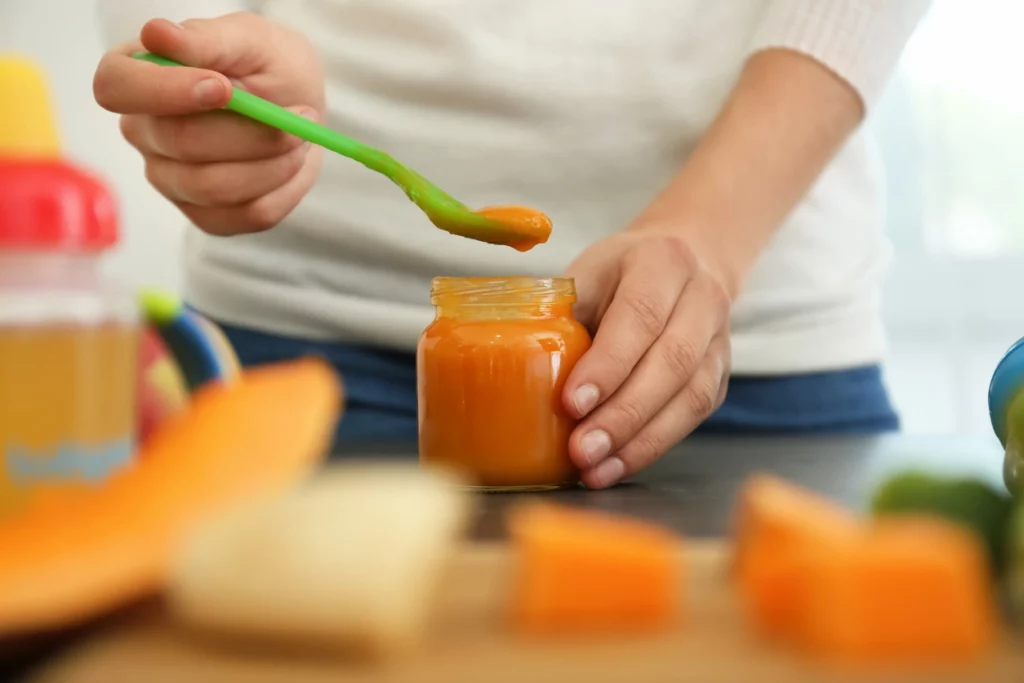
According to the American Academy of Pediatrics:
1. Start first with foods that are low allergy risk. Think pureed bananas mixed with breastmilk or formula.
2. Introduce foods one at a time. Wait 3 to 5 days between introducing new foods.
3. Keep variety in mind. Within a few months of starting solid foods, your baby's daily diet should include a range of foods, such as breastmilk or formula, meats, vegetables, fruits, eggs and fish.
Signs to watch for
Babies with allergies may experience a broad range of symptoms from itchy eyes and skin to life-threatening anaphylaxis. These can occur within minutes to an hour after they are exposed. Registered and licensed dietitian at Dallas Dietitian Nutritionist, Fatima Tai, says, “Anaphylaxis presents itself when a child can’t breathe, is wheezing or choking, and has hives and itching. It requires immediate medical attention, such as the use of an epinephrine pen.” Additional allergic reactions can include GI tract issues such as diarrhea or vomiting, nasal stuffiness, swollen eyes, lips, mouth, or throat, and dizziness.
Tai emphasizes the importance of parents understanding the difference between a food allergy and a food intolerance. “Food allergy is when your body does not accept the food and has a reaction that can cause itching and wheezing; food allergies can be life threatening as the body is rejecting that food. Food intolerance is milder and may only cause gut issues like bloating or cramping. Food intolerance is less severe,” Tai says.
To diagnose an allergy, your baby’s doctor may test the skin or blood, but sometimes a challenge test is needed. Supervised by an allergist, this test involves giving a minute amount of the allergen. Unlike skin or blood tests, which only show the likelihood of a reaction, a challenge test can determine the severity of your baby’s allergy.
If baby is allergic
Dr. Nana Mireku is a Mom-Approved pediatric allergist at TexasAllergyMD and the mother of two kids with food allergies. She says, “Keep allergic food on top shelves with red warning labels. When you are cooking, have separate utensils to prevent cross contamination. Have multiple sets of epinephrine auto-injectors on hand at home, in the car, and at school in case of an emergency. It’s also important to check to make sure the medicine hasn’t expired.”
Today, parents have more choices for how to help their babies fight allergens. Mireku says, “Avoidance is a legitimate treatment option, but I’d like to create awareness about two other treatments: Oral Immunotherapy (OIT) and Food Sublingual Immunotherapy (food allergy drops). These two treatments are my favorite as we are literally modifying the immune system so that these food allergic individuals can tolerate more of their allergic food. With OIT the goal is to be able to ingest the allergic food.”
There’s a silver lining for parents of children with allergies. Mireku says, “With certain allergens like peanuts, tree nuts, fish, and shellfish, typically only 20% will ever outgrow these. The question most parents have is when. As for milk, egg, wheat, and soy allergies, 80% of children will outgrow them over time.”
RELATED: Some Allergy Medicines May Be Harmful to Kids
Images: iStock