Mansfield mom Tarshua Tarpley remembers how her son Preston struggled in the public school system, and no one could get to the bottom of it. “I was getting calls from the principal’s office on a daily basis saying I needed to come pick him up,” Tarpley says. Feeling a lack of support from the school, Tarpley tried a year of homeschooling before she began to look into other options. Eventually she found the right fit—an Irving microschool with fewer than a dozen students.
It’s circumstances like Tarley’s that lead many parents to seek alternative education models to better address the specific needs of their child. And for more and more families, microschools are the answer. These learning centers break from tradition, serving an ultra-small study body that can range from K4 to 12th grade. In fact, these schools are so small, their median enrollment is just 16 students.
Like private schools, microschools can be run by larger companies, but many are grassroots. How they are funded, whether or not they are accredited and the requirements of teachers within microschooling systems are common questions parents are pursuing. Let’s dig in.
RELATED: Search our Schools & Education Directory
WHAT’S DRIVING THE MICROSCHOOL MOVEMENT?
Limited class sizes, flexible schedules, narrowly tailored instruction and a holistic approach make microschools appealing to more and more parents. Nationwide, it’s estimated there are about 95,000 of these schools. Once a niche solution to issues like overcrowded classrooms or concerns about safety, these innovative learning environments gained traction during the pandemic when traditional schools shifted to online or hybrid models.
Microschools may benefit from not having the procedural constraints that can hamper traditional school systems.
Don Soifer, cofounder of the National Microschooling Center, says, “During the pandemic shutdowns, microschooling took off in popularity as millions of American families came to reconsider their relationships with the institutions they had historically relied upon to meet their families education needs.”
Christine Pacioretty is director and instructional coordinator at Scholaris Academy, a microschool in Dallas with an enrollment of 14 students from first through eighth grades. She says families find the model an appealing alternative to the more traditional options.
“Many of our parents like the idea of homeschooling but don’t want to be responsible for teaching their children core content,” she says. “We provide a nice balance between homeschool and traditional school.”
Microschools may benefit from not having the procedural constraints that can hamper traditional school systems. This agility empowers them to adopt new teaching methods, cutting-edge technologies and unconventional curricula. As a result, microschools cater to students who might struggle in conventional classrooms, including those with learning difficulties or children who benefit from more flexible educational surroundings.
Tarpley says it’s made all the difference for her son Preston, who had fallen three grade levels behind. “After one year of going through the coaching process at [his microschool] Leading Little Arrows, we went to the testing center and found that Preston had jumped two grade levels.”
RELATED: Go Beyond Grades: Measuring Your Child’s Academic Progress
NOT YOUR TRADITIONAL CLASSROOM
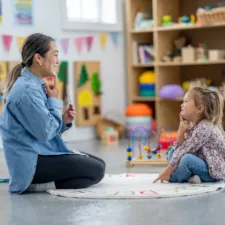
Microschools operate in diverse settings such as community centers, homes, retail storefronts or in nature. Their small size fosters a close-knit relationship between parents and teachers. With fewer students, educators can tailor lesson plans and pacing to meet individual needs effectively.
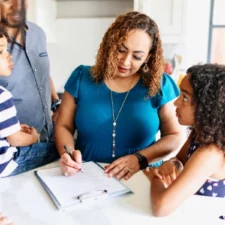
“Microschool educators are not required to manage overcrowded classrooms where they must teach to the (often mythical) center in one-size-fits-all instructional models,” Soifer says. “Families are active partners in their children’s learning trajectories at microschools and can be much more involved than larger, traditional schools allow.”
Scholaris Academy focuses on efficiency with students’ schedules condensed to three days a week of core content, starting later than most schools and getting out a little earlier. “We want our students to be more than their skill,” says Pacioretty. “This extra time in their schedule helps them explore various activities to further explore their talents, interests and gifts. This also allows for more quality time as a family and less stress at home.”
Amber Okolo-Ebube, founder of Leading Little Arrows, agrees, “Flexibility is fundamental to the microschool experience, allowing educators to adapt education to fit each child’s unique needs. In Texas, this means we can adjust our curriculum, teaching methods and even school hours to best support each learner. This especially benefits diverse learners, who may face unique emotional or neurodiverse challenges.”
The model also promotes peer interaction and socializing. “There is a misconception that there is no social development in the small environment, but we see the opposite. We see that students develop the social skills to communicate with children of varying ages. They are more likely to jump into leadership roles,” says Pacioretty. “They develop self-advocacy skills when speaking with adults or teachers.”
RELATED: Milestones in Social Emotional Learning
HOW ARE MICROSCHOOLS FUNDED?
The majority of microschools across the nation operate on a tuition-based model. However, in states with dynamic Education Savings Accounts or other robust school choice programs, families can tap into these funds to enroll their children in microschools.
Here in Texas, the funding varies depending on the school. “There are some nonprofits that offer small grants; we used that to offer scholarships for some students,” says Pacioretty. “Often parents will come together and help fundraise. I self-funded our school, but we were able to keep our costs very low because we were able to use a shared space.”
These innovative community partnerships might mean teaming up with churches, nonprofits, community colleges and family-friendly businesses. These partners provide crucial space and oftentimes skilled volunteers.
ARE MICROSCHOOLS ACCREDITED? WHAT ARE TEACHER REQUIREMENTS?
As microschooling gains popularity, a key question emerges: How will government regulation and accountability shape these learning environments? “Most Texas microschools are currently organized as either learning centers serving children whose families follow state homeschooling requirements, or as private schools. In either of these arrangements, the credentials of the microschool educators are only required to satisfy the needs of families who choose them,” Soifer says.
The National Microschool Center reports that 38% of microschools nationwide operated by currently licensed educators. Another 33% are led by individuals who were formerly licensed educators. Interestingly, 30% of these schools are run by people without an educator’s license.
“In Texas, microschools are not required to be accredited. Some choose to be,” Soifer says. “Because accreditation programs were designed by the companies who run them to work with larger, traditional schooling models (including both their educational and business models), few states currently offer state-sanctioned accreditation models that can be considered microschool friendly.”
According to Soifer, experienced educators often start microschools because traditional schools feel too restrictive. Without the rigid structures of conventional classrooms, microschools can allow children to build meaningful relationships and thrive.
RELATED: What is a Montessori School?
Top image: illustration by Sean Parsons and iStock