Tummy trouble seemed inescapable for 5-year-old Tej Sethi.
Colicky and sensitive as a baby, he spent his early years taking medication for gastric reflux – ironic for the son of a physician specializing in the treatment of the digestive system, but hardly uncommon for a toddler today.
“That’s what we thought it was, reflux or colic,” remembers his dad, North Texas gastroenterologist Dr. Rajiv Sethi. “That’s what we labeled it as. Although in retrospect, it wasn’t that at all.”
When he was about 18 months old, Tej was diagnosed with borderline autism, and shortly afterward an allergy to milk products. The Sethis sought treatment and Tej was doing well. Then, a year and a half ago, the family moved to a fixer-upper and the real trouble began. Several months after the move — and in the midst of a major remodeling project — Tej mysteriously began losing weigh. Lots of it. He dropped 20 percent of his body weight, plummeting to a featherweight 31 pounds.
“He was not growing in height as he normally did,” recalls Susan Sethi, his mother. We visited the pediatrician and went through the standard protocol, examining whether he was eating enough, and, if so, what he was eating. I tried introducing more fat into his diet, and I discovered that he was eating more than ever but was always hungry even a couple of hours after he ate. He became a lot more emotional around that time.
“He started complaining of abdominal pain around his belly button every morning and two hours after every meal. Over the next few weeks, the pain became more intense and lasted longer and longer. He forgot how to do simple things like climb his jungle gym and was absent from virtually his entire summer camp. He even lost the ability to toilet and was back in diapers,” she recalls.
The mom continues: “I noticed neurological changes, also, such as mood swings and tantrums. He did not want to speak, and when he did, his words were incoherent. He developed mouth sores on a daily basis, and his two front teeth became stained with a brown coating.”
The Sethis took Tej to a pediatrician, then a pediatric gastroenterologist. Tests (a fecal fat analysis, blood work, an upper endoscopy) all came back normal. They tried more food, more fats. They tried different foods and different fats. Susan Sethi suspected another food intolerance and put Tej on an elimination diet.
“I could not determine which food was the culprit,” she laments. “I was getting desperate as I saw my once energetic, happy, healthy son slowly slip away from me. I really thought if I did not do something soon he would end up in the hospital — or worse.”
Tej was so weak and in so much pain that he couldn’t move from the couch. His mother spent long hours beside him, day and night, rubbing his tummy. “We didn’t know what else to do for him,” Dr. Sethi says simply.
‘Our kids are the canaries in a coal mine’
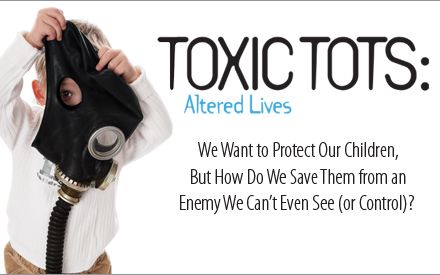
Autism, life-threatening food allergies, ADHD, asthma — could there be a common link behind the appalling upsurge in these diseases? Signs (an increasingly toxic environment) point to yes. Last year's recalls of lead-tainted toys served as a wake-up call to many parents. Toxic substances lurking where they least expected it: in their child's favorite toys.
The trouble is, Americans can’t seem to get a handle on a problem that stems not from a single germ or gene, but rather from the sheer number and variety of chemicals in our modern environment.
“Our kids are the canaries in a coal mine,” says Dr. Kenneth Bock, author of Healing the New Childhood Epidemics: Autism, ADHD, Asthma, and Allergies. “American children are growing up in a toxic environment, a chemical soup sensitizing them to even the common foods they need to grow and thrive.”
While scientists may wrangle endlessly over the details, the overall picture is clear. "Many environmental contaminants have been conclusively shown to affect the developing nervous system, causing a range of performance deficits," writes Dr. Stephen Gilbert in the Collaborative on Health and the Environment’s Learning and Developmental Disabilities Initiative, published in November 2007. "The scientific evidence we have reviewed indicates environmental contaminants are an important cause of learning and developmental disabilities.”
Dr. Rebecca Gruchalla, professor of allergy and immunology at the University of Texas Southwestern Medical Center, colors in the frustrating picture faced by doctors and researchers who are teasing out the ways toxins contribute to so many childhood illnesses. “It’s not only what you’re exposed to but when you’re exposed to it,” she explains. “It may be the right mix of things you’re exposed to at a certain time and with a genetic predisposition.”
Bock calls this concept “synergistic toxicity,” an especially ugly equation for parents, because it means that even so-called “safe” levels of chemicals can collide with disastrous effects.
And while some parents are taking notice, spawning the growth of the multimillion-dollar market for organic baby furnishings, clothing, gear and personal-care products, the sheer number of potentially harmful substances can be too overwhelming (and costly to prevent) for the most chemical-conscious among us.
‘They turned their lives upside down, scrutinizing every detail’
For the Sethi family, life was a web of food that didn’t nourish and pain that didn’t relent. Despite their misgivings about anything outside the mainstream, in the absence of alternatives, the Sethis made an appointment with Dr. William Rea at the nearby Environmental Health Center.
Tej endured more than 300 separate needle tests, uncovering an incredible 40-plus food allergies. They pulled the offending foods and began a rotation diet, designed so that Tej’s body would not have contact with any one food long enough or frequently enough to develop an immune reaction to it.
Yet despite immediate improvements, Tej wasn’t yet out of the woods. His weight had only increased 1 1/2 pounds. “Something else was still going on,” Susan Sethi recalls with frustration.
Testing uncovered more trouble: an overgrowth of intestinal bacteria preventing him from absorbing his food and an immune reaction to his own peptides. The Sethis were grateful to have something to go on that was actually helping their son. Yet still they wondered: What had caused this avalanche of symptoms? They turned their lives upside down, scrutinizing every detail. They tested their house for mold, tested Tej for still more problems. All negative.
‘It’s like a chemical cocktail in here’
The chemical culprits that bombard our children’s immune systems are ubiquitous in American life. Yet these same toxins are responsible for spurring many children’s immune systems into overdrive, provoking maladies from asthma, eczema and allergies to autism and ADHD. The links are pouring in. Diabetes was even tied to environmental pollution in a report published early this year in the respected British medical journal The Lancet.
What’s more, research published during 2006 in Environmental Health Perspectives suggests a potential association between autism and air pollution around a baby’s home. Health and Place 12 reported in 2006 that for each 1,000 pounds of environmentally released mercury, on average, there was a 43 percent increase in the rate of special education services and a 61 percent increase in the rate of autism.
Add to that the chemicals that surround our children every single day:
- Cleaners
- Pesticides
- Phthalates (plasticizers, including BPA, phthalates and PCBs; even though the health effects are not clear, Toys ‘R Us and Wal-Mart will ban baby products containing the compounds later this year)
- Fire retardants in clothing and bedding
- Volatile Organic Compounds (VOCs) in furniture, paints, carpeting and furnishings
- Ozone, particulates and heavy metals in the air
- Lead and other heavy metals (lead paint in homes built before 1978, toys, medicines, soil)
- Mold (in homes, schools and other buildings children frequent)
- Food allergens
- Food additives, preservatives and genetically modified ingredients (GMOs)
The light came on for the Sethi family after Susan Sethi read several books written by the Environmental Health Center’s Dr. Rea. And the culprit was nothing they had ever suspected.
“We had redone the entire house from top to bottom, and we hadn’t used any special materials at all,” she exclaims in horror. “I didn’t know anything about this [toxic building materials].”
Her fears that their own home had become toxic were confirmed when she noticed two things upon returning from a family trip: Tej felt much better than usual during time away from home, and the house still smelled brand new, like fresh paint.
“It’s like a chemical cocktail in here,” she notes. “We didn’t have a special air filtering system at that point. I began to say, ‘Is it possible that this could have triggered something with my son?’”
Susan Sethi surveys the damage in retrospect: “We did a lot of faux finishes, re-painted the whole house, stained the existing hardwood and added hardwood floors to the rest of the house. We added new light fixtures, as well as new ceiling fans. And when we landscaped, we sprayed (harmful chemicals) to kill the weeds.” The family did not use, nor were aware of, eco-friendly paint, glue or carpeting — a business that is on the rise, according to the Organic Trade Association.
The Sethis soon discovered just how many toxic chemicals they had unwittingly introduced to their home. “The chemicals dispersed in regular paint are called volatile organic hydrocarbons (VOCs), and a lot of the glue used in the floors and padding under the carpet contains formaldehyde,” Susan Sethi reveals. “The paints, glues and stains also contained preservatives and other chemicals.”
The family realized that chemical assault in their home had pushed Tej’s already fragile immune system into overload. “I didn’t even know there was a connection between chemical sensitivities and pesticide exposure to food,” she laments. “I thought food was food. If you had a food allergy or food sensitivity, I thought it was separate from all those people walking around saying ‘Oh, I’m sensitive to gas fumes.’ I had no idea there was a connection.”
‘Children suddenly hit this tipping point’
“The straw that broke the camel’s back” is a phrase of no little significance to moms like Robyn O’Brien. O’Brien, the mother of four children with food allergies and founder of Allergykids.com, reads the connection between environmental toxins and health, loud and clear.
“(Children) suddenly hit this tipping point,” she reports. “Something sends them over the edge, whether it’s laundry detergent or something you used to clean with.” O’Brien has become the Erin Brockovich of food, a relentless advocate pushing to end artificial and genetically manipulated ingredients, which she theorizes are major catalysts in chronic health problems such as asthma and autism.
Area specialist Dr. Mary Anne Block, medical director and founder of The Block Center, notes similar issues with allergies and low blood sugar — “symptoms that get labeled as bipolar disorder.” “The kids that were getting labeled ADHD are now getting a bipolar diagnosis,” she alerts. “The fact is, there are underlying medical causes of these symptoms. So many times, simple dietary changes clear this child up. When I see these kids who have received a bipolar label, [I often find that] nobody’s even looked at their diet; nobody’s done any lab work on them.”
It’s obvious that we must protect children from this toxic soup, but where should a conscientious parent begin? Gilbert urges families to start with small steps, such as taking off their shoes when entering the house (and vacuuming frequently) to avoid bringing in contaminants from outside.
And, Bock advises parents not to overlook pesticides, plasticizers, flame retardants in clothes and bedding, and heavy metals in everything from chicken and pressure-treated lumber to soil, seafood, polluted air and vaccination additives.
Dr. James Marshall, a regional medical director of clinical research, adds a surprising culprit to the list: automobiles. He warns against the affects of exposure to gasoline (in cars, stored in the garage for mowers and power tools, and in the soil and air) and latex rubber from car tires that’s aerosolized from the constant rotation of the tires. “Latex is a highly allergenic compound,” he says. “In fact, there are allergists who measure it as a particulate daily in the air of some cities.”
While parents can’t afford to stick their heads in the sand, neither should they feel trapped inside a lifestyle of paranoia. “Technology is a double-edged sword,” Bock cautions. “You have to balance technological advantages versus persistent exposure. The problem is that it’s so often not just one thing that causes health problems.”
The bottom line: Beware of the toxins in your child’s environment. And, because they’re cumulative, don’t let the little things slide. It’s the sum of all the parts that could send your child into a tailspin.
‘We had exhausted mainstream medicine’
The irony of the Tej’s situation is that Dr. Sethi himself specializes in problems of the digestive system. “You kind of feel helpless because you understand a lot of things, but it’s your child,” he confesses. “Having to deal with that is very difficult when you’re the professional who people look to for answers.”
As Tej’s illness illustrates, modern medicine often fails to connect the dots holistically between body systems and outside influences. “I know it’s such a farfetched idea, but my husband was just forced to see the reality of it,” Susan Sethi remembers. “We had exhausted mainstream medicine and nobody could help us. He was forced to accept the fact that yes, people can become chemically sensitive to things, can become sensitive to their foods and their environment.”
Rea’s treatments have made all the difference for Tej, according to Dr. Sethi. “As a father, I can say that my son is on the road to recovery and that’s because of Dr. Rea,” he states unequivocally. “I would have seen anybody or done anything if I thought it was going to help my child. It didn’t matter if it was standard medicine or not. I just wanted him to get better.”
Today, Dr. Sethi is more open to finding solutions in unexpected places in his own practice. “It has made me more open-minded to other forms of treatment out there,” he says. “Now, I do believe that nutrition and diet do play a role in gastroenterology.”
‘These meteoric increases demand explanations’
If we know chemicals are wreaking havoc on our children’s health, why don’t we regulate them and stop toxins dead in their tracks? With no single cause for many of these problems, scientists and regulatory agencies are reluctant to point any fingers. “Expert opinions are all over the map regarding which factors contribute to their development: genetics, environmental conditions, vaccinations,” Bock admits. “There are even those who say there is no epidemic but simply that we have better diagnostic tools and earlier intervention so it only looks like more children are affected.”
Bock doesn’t subscribe to the idea that better reporting is behind today’s increased number of cases.
While diagnostic tools have remained unchanged since 1994, he notes, autism continues to increase at double-digit rates. He cites figures showing that over the past two decades, autism has increased 1,500 percent, ADHD by 400 percent, asthma by 300 percent (with asthma deaths increasing by 56 percent) and allergies by 400 percent. “These are staggering statistics and these meteoric increases demand explanations,” he concludes.
Where Bock and other experts do agree is that the impact of environmental toxins is finally gaining recognition as an undeniable trigger to many diseases. “There is no doubt that exposure to environmental contaminates (toxicants) can result in a range of health effects from cancer to developmental and learning disabilities,” Gilbert states. “The links are stronger for some than other agents. But the connection is clear.”
Taking action is where Bock, Gilbert and other experts see America falling short. “The United States is no longer the leader in protecting environmental and human heath,” Gilbert laments. “This has moved to Europe with the implementation of Registration, Evaluation and Authorization of Chemicals (REACH)."
According to Gilbert, “REACH will require manufactures to test chemicals for toxicity and acknowledge what chemicals are in the products. This applies to international companies importing products and thus will have a significant impact on U.S. corporations.”
Gilbert fears that our country is poised to become a dumping ground for contaminated products. “This is already happening with cosmetics,” he reports. “Europe banned phthalates, so the cosmetics industry has two formulations: one for Europe, and one for the United States.”
We need to shift our regulatory approach, Gilbert says, from “How much harm can we tolerate?” to “What actions can we take to prevent harm?”
Representatives from the Consumer Product Safety Commission (CPSC) and the Centers for Disease Control (CDC) supplied informational links to their Web sites, but had no further comment about environmental toxins as a whole.
‘You do whatever it takes to make your child feel better’
Rotation diets and constant vigilance for environmental toxins that could disrupt Tej’s fragile balance are a fact of life for the Sethis. “We look at things that are around us and it’s hard to imagine that it doesn’t have an effect,” Dr. Sethi marvels. “Just like you take drugs through your mouth, things are around you that are also getting into your system.”
Once they discovered their home’s toxic influence on Tej’s delicate system, the Sethis swept through the house making changes: organic foods and cleaners, regularly throwing open windows, special air filters, no more processed foods and very little preservatives, artificial flavors or colors.
“The degree of change required in a home or to a family’s lifestyle is mandated by the seriousness of the child's condition,” Susan Sethi soberly notes. “You do whatever it takes to make your child feel better.”
Today, Tej is slowly improving. His treatments and therapies are numerous: occupational therapy, speech therapy, cognitive skills training, a special needs gymnastics program, karate, vision therapy, private tutoring, school ARD meetings, and grasp, fine motor and handwriting therapy. Tej is up to 34 pounds, and the Sethis hope that his next round of treatments with Rea will make the crucial difference in his ability to absorb the nutrients in his small bowel.
Susan Sethi says she now devotes herself to her son’s regimens and has become an evangelist for the link between environmental toxins and chronic health problems. “I knew that there was a connection, I just didn’t put the whole thing together.”