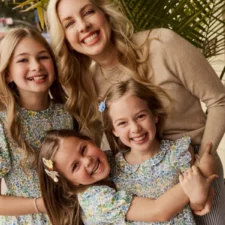
When Wendy Deppe’s stepson, 5, needs a juice refill, he turns to his stepmother. Whether it’s a clean T-shirt, a ride to sports practice or words of encouragement, Deppe, who’s been married to her stepson’s father Bill for a year, offers unwavering support. But, when the active boy stumbles and scrapes his knee, he only wants one person: his mom—not his stepmom. “While I might treat him like my own son and take care of him like a mother, I’ll never be his mom,” shares Deppe.
It seems a heartbreaking truth—to love a child who may not love you back, or who may never view you as the mother figure you are. Most biological moms will never experience this heartache, and probably don’t consider it. We wondered what else about the step mom’s perspective, we probably don’t know so we visited with area stepmoms themselves to hear what they had to say ….
Outsider, Looking In
When a person marries into a family, whether a spouse has children, young or old, that family shares a bond that doesn’t involve the new stepparent—and, as you can imagine, that can be tough to swallow. “Stepmothers really feel outside of the circle,” explains Laura Petherbridge, author of The Smart Stepmom (and a stepmother of two grown sons). Stepmothers “feel like their husband and children have a bond that she’s outside of … this can make moms feel very isolated.”
And Deppe points out that this feeling of isolation transcends the home. “I’ll never be in the Mommy Club,” she shares. This feeling is particularly present when Deppe, who resides in Coppell, spends time at her stepdaughter’s school (she is 6½). “I was chatting with another mom and my stepdaughter called me by my first name. The other mother said, ‘Wow, you let her call you by her first name?’ I told her that I was a stepmom. The mother’s whole attitude and demeanor changed entirely … it’s that response I wish would just go away.”
Balance of Power
What happens when a stepmother tries to parent an unwilling child (even with a request as simple as “Please walk the dog”)? They “can reject you,” reveals Petherbridge, “or go even farther and lash out at you when you try to show any authority.” It’s critical, says Petherbridge, for the father to establish a stepmother’s authority in parenting matters over time.
“The biological dad is the fulcrum of the family’s balance,” says Amy*, a Little Elm stepmother of three (ages 22, 11 and 5). With Amy’s family, this balance has been difficult to find—even after four years of marriage. “We don’t always agree on how he parents his kids, particularly our middle daughter who frequently goes around me in the decision-making process,” Amy explains. “I think she needs more consequences for things like not keeping her room clean. My husband might disagree with me and that undermines me in her eyes.” Petherbridge chimes in: “The role of parenting predominately falls to the biological father. But the two parents have to be united on the same page, otherwise the balance will remain off-kilter—and kids might just take advantage of that breakdown,” she says.
Just because a stepmother should revert to the biological father for discipline, that doesn’t mean that stepmothers need to take criticism on the chin (which they often do, says Deppe). “Stepmothers are a safe target—kids worry about hurting mom or dad, but stepmothers are expendable,” shares Petherbridge. “The father needs to stand up and say, ‘You don’t have to love her, you don’t even have to like her, but you have to respect her.’ And there needs to be severe consequences if the kids don’t abide by that.”
The Woman They Call ‘Mom’
Sharing custody means sharing parenting duties even when biological (and step) parents disagree. The relationship between stepmother and biological mother can, at times, be volatile. “It’s easy to forget, in haste, that both [women] have the children’s best interests in mind,” says Petherbridge.
What happens when a stepmother and biological mother collide? Amy, who has raised her stepson with joint custody since he was 10 months old, says she sometimes fears for her stepson’s safety when he’s in his mother’s care (she was recently arrested for endangering the safety of her son, but Amy and her husband were unable to revoke her custodial rights). Yet, “I really have no place to bring these concerns to his biological mother,” she says.
It’s best, says Petherbridge, “to discuss feelings about the biological mother’s care to your spouse in a private setting.” Stepmothers should never talk about the biological mother in a negative light in front of children, she says, as tough as that may be.
There are, however, step-and-bio parent duos that find ways to have positive relationships. Deppe, who shares fifty-fifty custody with her stepchildren’s mother, says, “We do what needs to be done for the sake of the kids. It can be uncomfortable and awkward but it’s never ugly,” she says. “I hope she knows that I really do love her children and that I don’t aim to replace her as their mother.”
In Petherbridge’s opinion, most biological moms (whose children have a stepparent) miss one vital aspect of aiding their children’s future: letting their kids love the stepparent. “If you really love your kids, give your children permission to love their stepmother—even if you don’t like her,” she says. “Loving the other home will ease the stress and strain of feeling torn, causing them as little angst as possible.”
(Step)mother’s Day
One thing’s unanimously certain, it’s not an easy job to parent someone else’s child—especially on holidays devoted to Mothers, like May 9. Deppe agrees, “It makes me wonder if I’m ever going to have someone to love me on Mother’s Day.” So dads, take note: “Mother’s Day is painful for stepmothers. We do at least half of the work and get none of the perks,” shares Petherbridge. “I had to let my husband know that the day hurt my feelings, and now he does something nice for me to say thank you for the effort I make as a mother figure in the boys’ life.”