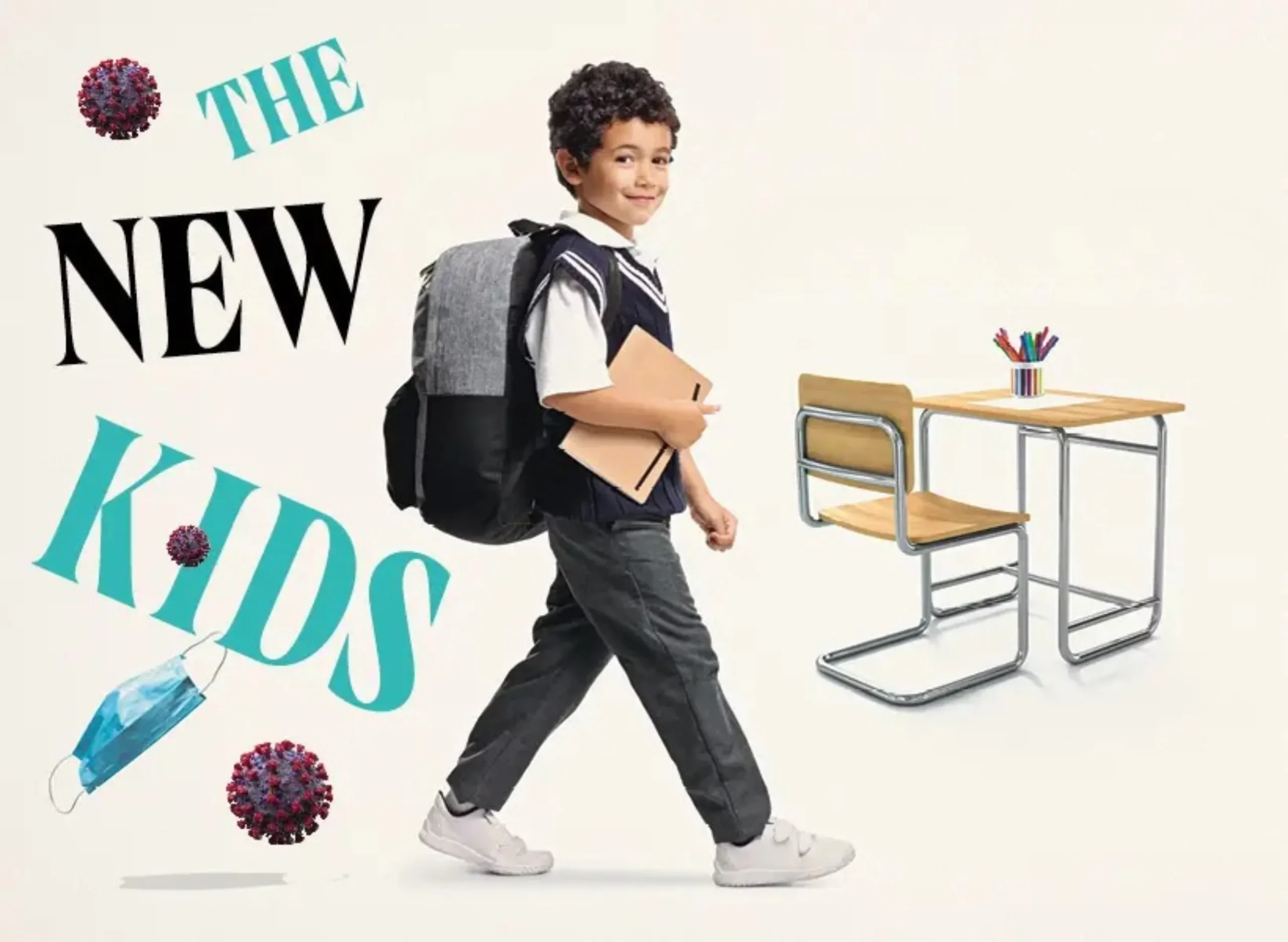
They were born in a room full of masked faces and met their grandparents through glass windows. Their early milestones were celebrated in Zoom calls and socially distanced drive-bys. Toddlerhood was spent at home with limited opportunities to socialize—at least in the usual sense. And this year, those pandemic babies are going kindergarten.
Here at the start of a new school year, life has returned to normal. Still for many kids, the effects of the pandemic linger, especially in classrooms, where students lost ground in reading and math.
But what about youngest children stepping into schoolrooms this year, for whom life started in a bubble? They lived through that strange, socially distanced world in the earliest years of their life; a crucial time of development that lays the foundation for future learning. Will these children face any unique challenges as they begin formal education?
RELATED: Identifying Your Child’s Learning Style
When I look at my own pandemic baby—my youngest son, born in January 2021 just weeks after the first COVID vaccine rolled out—it’s hard to know if that timing has any effect on him. He certainly doesn’t recall that our first look at each other was obscured by a mask, or that we waited weeks to meet extended family. And I didn’t have to rush back to the office after maternity leave; we had more time together than if he’d been born a year earlier.
But though I was home, I was stressed—like so many parents during that time, I was anxious and isolated. And I know I was a different mom in those early days than I was to my older son. As he enters pre-K this fall I wonder: does that altered early scaffolding have any impact on who he is today? If he doesn’t remember it, does it even matter?
And then I think about my older son, who turned 3 when stay-at-home orders were still in effect, and is now 8 and going into third grade. He missed his first year of preschool, like many of his peers. Nearly 300,000 fewer children were enrolled in preschool during the 2020-2021 school year compared to 2019-2020, according to the National Institute for Early Education Research—an 18% decline.
This disruption in early childhood education can make it harder for many kids to learn foundational skills, and these gaps can compound over time. Will our children who weren’t even in school during the pandemic now be impacted in the classroom?
While not every child was affected in the same way, the data is clear: the pandemic left developmental footprints.
Why the First 5 Years are Crucial
Though children don’t remember their first few years of life, they are among the most important in shaping who they become. During this time, the brain develops more rapidly than at any other point in life, with 90 percent of brain growth occurring by the time a child starts kindergarten.
“The first five years are very crucial,” says Dr. Ranjith Kasanagottu, a developmental behavioral pediatrician at Children’s Health in Dallas and assistant professor at UT Southwestern Medical Center. “Theres a lot of rapid and dynamic changes in the brain structure and function, and it kind of lays the foundation for later cognitive and behavioral and emotional capacities. This time is highly vulnerable to developmental disorders, so any deviation from typical trajectory can be associated with behavioral and cognitive outcomes.”
And the COVID-era was indeed a departure from the norm, even for babies and toddlers. Many had fewer caregivers, less interactions with people outside the home and fewer opportunities for peer interaction as they grew. Without daily exposure to extended family, trips to the library, or even simple outings to the grocery store, some babies and toddlers missed out on the unstructured learning that comes from observing and interacting with a rich, varied world.
Instead, social cues hidden behind masks, limited exposure to peers and heightened parental stress were the norm. And fewer well-baby visits, therapy access, or early intervention services during lockdowns may have delayed detection or support for developmental concerns.
What the Studies Show
Among this population, studies have noted “small but significant delays in communication, personal social skills and problem solving, particularly in early childhood and infancy,” says Kasanagottu. A Johns Hopkins study analyzing the pandemic’s impact on nearly 50,000 children ages 0–5, for example, found “modest” delays in communication, problem-solving, and personal-social skills.
“He’s optimistic: ‘In the last two or three years, we have seen a lot of significant improvements in children’s developmental milestones.'”
And small studies from Columbia University and Brown University found that babies born during the COVID-19 pandemic scored lower on developmental assessments—especially in motor, language, and social-emotional skills—compared to their pre-pandemic peers.
Another small study published in JAMA went even further: it found that by age 5, children exposed to the pandemic during early childhood were, on average, 4.4 months behind in developmental age. Those whose parents reported symptoms of depression experienced even greater developmental delays, while children in higher-quality childcare settings tended to fare better.
In short, while not every child was affected in the same way, the data is clear: the pandemic left developmental footprints.
How this could impact these children as they go to school now—and in the future—remains to be seen. Kasanagottu noted that long-term studies will look at these children’s academic performance, emotional regulation and social skills. But he’s optimistic: “In the last two or three years, we have seen a lot of significant improvements in children’s developmental milestones.”
What Teachers are Seeing
Educators are on the frontlines of the shift to the post-pandemic classroom, and many say the littlest kids are fine; it’s the elementary-aged students who are stuck with lingering impacts. “It’s this year’s fifth graders that had isolated in-class kindergarten or at-home kindergarten,” one local mom told me. “This is the group that is struggling both academically and behaviorally.”
The learning loss among older children whose in-person learning was disrupted has been well documented. Across the country, students last spring were still about half a year behind in reading and math compared to where their peers were in 2019, a report found. In Texas, average student achievement remained over half a grade level below 2019 levels in math and almost one-third of a grade level below in reading. And locally, more than half of North Texas third-graders demonstrated reading capabilities below grade level in 2022.
But Staci Funkhouser, a McKinney mom whose youngest child was born in November 2019 and who taught pre-K last year, also has concerns about pandemic-born babies. “A big impact I have seen in kids this age has been speech,” she says, noting that last year she had several students in her class with speech delays. “Another big thing I have noticed is increased anxiety from kids. I’m not sure if this is COVID related, but it is definitely higher now than it was in my prior years of teaching.”
How Kids are Built for Catching Up
Early development is remarkably plastic, and children’s brains are wired to grow, adapt and respond.
Fort Worth’s Alexa Fuller Situ has twins who were born in 2020. “They were far more clingy for the first few years than my 2022 and 2024 babies, because we were a fully work-from-home family for a few years and they didn’t know many people outside the household for at least a year.” And now at age 5? “They’re more than ready for kindergarten at this point.”
Academically and socially, some kids are right on track. Others lag slightly behind in pre-literacy, fine motor skills, or social-emotional development. And though experts predict some of these kids may have difficulty with separation or settling into a structured social setting, they say school is exactly what they need.
“It is so crucial not just for social skills, but also communication, a sense of well-being, a sense of connectedness,” says Kasanagottu. Plus, research tells us that gaps in development narrow significantly once children enter enriched learning environments.
Early development is remarkably plastic, and children’s brains are wired to grow, adapt and respond. With the right support from parents and teachers these children are well-positioned to catch up, and the early pandemic effects can be softened or even reversed.
4 Ways to Support Your Kids New to School
So how do we help the class of 2038 thrive? The answer is in connection. It’s giving children the time and space to practice being part of a community. Here are some ways educators and parents can support these new kids at school:
1. Focus on play-based learning. Imaginative play builds language, empathy, problem-solving, and confidence—all vital for academic success.
2. Model social skills. Practice sharing, empathy and turn-taking at home. Narrate feelings and reactions to help children develop emotional vocabulary.
3. Watch for stress. Some kids may internalize anxiety or fear. Open communication between parents and teachers is essential.
4. Celebrate small victories. From tying a shoe to writing their name, pandemic babies—like all kids—deserve to feel proud of their progress.
5 Ways to Start the School Year Strong
According to developmental behavioral pediatrician Dr. Ranjith Kasanagottu:
1. Focus on routine and structure. Things like regular sleep and mealtimes and a daily routine helps kids feel safe, confident, and in control—key ingredients for learning and emotional development. Consistent daily patterns reduce anxiety, improve focus, and allow kids to better manage transitions and expectations throughout the school day.
2. Prioritize parent-child connections. “Having family time lowers anxiety and depression in children and talking about feelings opens up communication,” says Kasanagottu.
3. Read together. Reading with your child builds their vocabulary, comprehension and attention span—core skills that support success in every subject. “It also helps with communication, social emotional wellbeing, and it teaches emotional regulation.”
4. Limit screentime. Instead, encourage one-on-play. “Playing with toys and games promotes that sense of connectedness and improves social skills.”
5. Take care of yourself. Address any mental health issues like anxiety or depression, not just for yourself but also for your child, says Kasanagottu. Your primary care physician is a good place to start if you’re not sure where to turn.
RELATED: A Special Education Consultant’s Top Tips for Parents
Top image: iStock