In this article:
- Social factors that make friendships tough for autistic kids
- Why peer play is beneficial
- Ideas to help kids feel more included
- 5 Hacks for a parent playdate
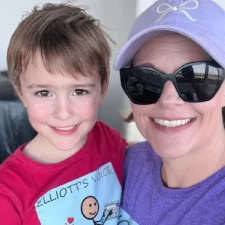
For parents of children with autism, you might have seen your child hover at the edges of group play. They’re curious about friends but cautious, eager, yet unsure. Maybe you’ve watched from the sidelines, hoping for that small spark of connection. Victoria Renfro Boll, director of programs and philanthropy at Lighthouse Therapy Center of Fort Worth, knows this feeling all too well. Her two sons, Crawford, 7, and Bodhi, 5, are both on the spectrum.
She says, “Social interactions don’t always come easily for them, and as their mom, that’s been one of the hardest things to watch. But it’s also where I’ve seen the most growth and the deepest moments of pride. A shared laugh, a high five, a friend remembering their name—those moments mean everything to us. They’re reminders that connection is possible, even if it looks a little different.”
Many families navigate these same challenges in helping their child with autism build friendships and feel included. We talk to experts about simple, supportive tools to help your child connect with others across familiar settings like home, school and the playground.
RELATED: Sensory-Friendly Attractions in DFW
Friendship Can Be Harder for Kids with Autism
For kids on the autism spectrum, making friends can sometimes feel a little complicated. “The challenges one autistic child faces when it comes to socializing with peers are different from those another child may face,” says Tracie Mann, headmaster of Jane Justin School at Cook Children’s, which enrolls students between the ages of 3 and 21 with developmental and learning disabilities and related behavior disorders.
“For autistic children with more barriers to verbal communication, social interaction can be even more challenging. In my experience, these children might be more likely to avoid social interaction—perhaps because it is difficult, perhaps because there is a history of being teased or ridiculed, or perhaps because they value other experiences over social interaction and are less likely to seek it.”
Some social factors can be tough for autistic kids, like:
• Unspoken rules: Knowing when to talk, take turns or join a group isn’t always clear. They might need help learning how.
• Body language: Things like facial expressions, tone or gestures can be easy to miss.
• Conversations: Starting or keeping up with a chat, especially when people talk fast or use sarcasm, can be tricky.
• Loud or busy places: Crowded spots like parties or recess can feel overwhelming. Quiet breaks can help.
• Changes in routine: Sudden changes or surprises may throw them off. Predictability brings comfort.
• Anxiety: Fear of being judged or left out can make social settings stressful.
• Different ways to connect: Your child might prefer talking about a favorite topic or playing alongside others, and that’s perfectly OK.
Why Playtime with Friends Matters
Peer play can be one of the most powerful tools to help build essential life skills for kids on the spectrum. We’re not talking about forcing them into uncomfortable group settings or pushing for a packed social calendar, but rather meaningful moments of connection.
Here’s what peer play can help with:
• Language and communication: Playing with peers creates natural opportunities to practice talking, listening and using non-verbal cues like gestures or facial expressions. It’s language in real life, not just what they’re taught in therapy or school.
• Emotional regulation: Through play, kids learn how to handle excitement, frustration, disappointment, all in real time. They start figuring out how to name their feelings, react to others and calm down when they need to.
• Building self-esteem: Making a friend, joining in a game or even just being part of a group can boost a child’s confidence. It reinforces the idea: “I belong. I matter.”
• Social problem-solving: Sharing toys, taking turns, navigating rules, these aren’t just kid things, they’re life skills. And play offers lots of safe chances to practice.
Boll says, “Success, for us, is when my children feel connected—when they’re happy, comfortable and accepted for who they are. It’s not about having a big circle of friends, but having a real connection, even if it’s with just one person. Success is when they feel seen and valued in their relationships.”
How to Help Kids with Autism Connect to Others
Whether you’re a teacher, a parent or the person organizing the neighborhood playdate, here are some doable tips to help kids on the spectrum feel more included without overwhelming anyone in the process:
• Start with what they love. Does this kid light up about dinosaurs, trains, LEGOs or space exploration? Use those passions as a bridge. Invite another child who shares even a sliver of that interest to join in.
• Think side-by-side, not face-to-face. Parallel play—where kids play next to each other rather than with each other—is often a great first step. No pressure, no forced interaction. Just proximity, comfort and time to warm up.
• Select the right environment. Ashlyn Wimmer, owner and executive director of Lighthouse Therapy Center of Fort Worth, says, “The appropriate setting is incredibly important to encourage socialization for autistic children. Structured environments like clubs, LEGO therapy or activity-based groups revolving around art, science, or music are good. Smaller, quieter settings are better than large or chaotic ones.”
• Visuals are your friend. You don’t need fancy materials, just simple cues like a picture chart or a “first this, then that” card. Boll says, “We’ve found visual supports, especially social stories, to be incredibly helpful in preparing the boys for new situations and teaching social concepts.”
• Model behaviors of friendship. Sometimes kids need to see what connection looks like. “This process allows the child to see what the social skill might look like, offers plenty of practice, and gives them feedback on how they are doing,” Mann says. “The hardest part about teaching social skills is ensuring the skills taught in the classroom, or in a clinic, are then used in the child’s natural environment.”
• Celebrate tiny triumphs. “I’ll never forget the first time one of my sons invited another child to play—it was simple, but it meant the world. Or when my son made eye contact during a back-and-forth conversation. These little moments reminded me that connection was happening, just in their own way and on their own timeline. Watching them make a connection, even a small one, feels like witnessing something sacred,” Boll says.
RELATED: All-Abilities Parks, Playgrounds & Indoor Play Areas
It’s not just about the connections children make in autism families. Mann suggests that parents should “connect with others in social media advocacy groups and special education PTOs and PTAs. Reach out to school counselors and inclusion specialists for support and advice. Ask your friends! Maybe not all will be receptive, but I bet more than you think would be thrilled to support you.”
Mann says, “If we’re really interested in supporting autistic children’s ability to connect and build authentic relationships with others, we cannot underestimate the power that understanding, patience, and acceptance have … What if the onus was also on the neurotypical population to learn how to better connect and form relationships with children with autism, instead of this being a one-way street.”
RELATED: How to Help Your Child With Special Needs Find Friends
5 Hacks for a Parent Playdate
1. Keep it short.
Shorter playdates (30–45 minutes tops) reduce the chances of overwhelming your child and help end on a positive note.
2. Plan easy wins.
Think sensory bins, bubbles, or puzzles…structured, low-stress fun. One or two activities is plenty.
3. Prep the players.
Chat with the other parent first. Share routines, triggers and comfort strategies. Clarity equals confidence.
4. Set expectations.
Give your child a quick visual schedule or walkthrough of what to expect. Familiarity helps calm nerves.
5. Have a gentle exit plan.
Keep a quiet zone, a soothing snack, or a reset activity nearby. Be ready to wrap early if necessary.
RELATED: Love and Special Needs: Overcoming Your Fears as a Parent
Top image: iStock