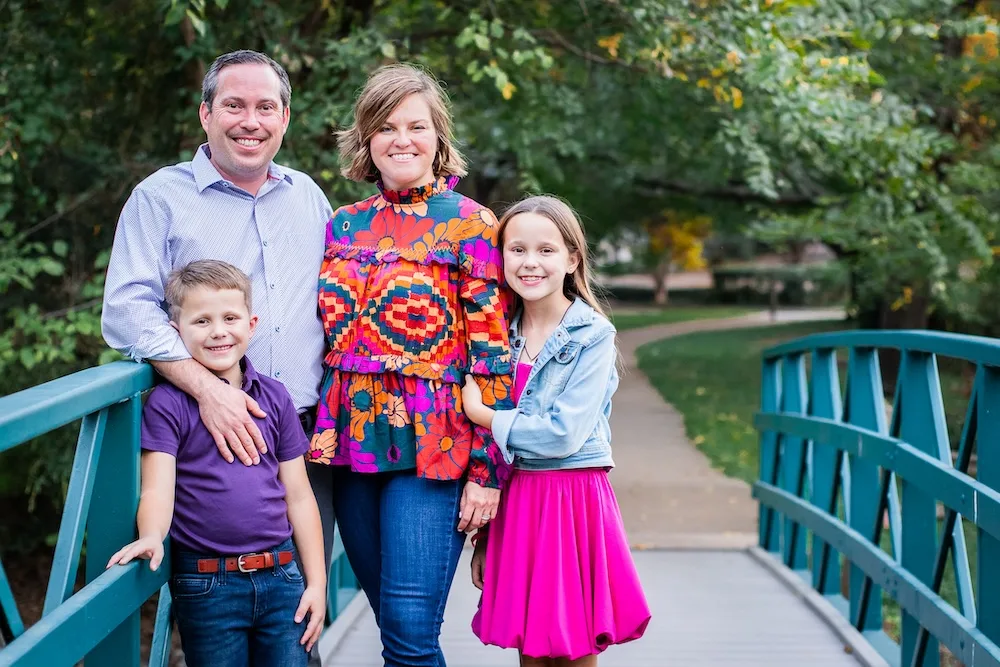
“It takes a team effort,” says Lauren King, whether that’s tackling the trials of parenthood or taking on some of our community’s biggest challenges. In both instances, the mom of two and executive director of the Tarrant County Homeless Coalition draws from her circle. At home, that’s a close-knit extended family that lives within just a few miles of her, and at work, it’s over 40 partner organizations working to end local homelessness.
The number of Texans experiencing homelessness grew by more than 12% in 2023, federal data shows, though rates in areas of Dallas-Fort Worth were steady or even dipped. Still, thousands of people are without a place to sleep on any given day in DFW, including many families with young children. “I just think we can do better by our neighbors,” says King.
Here, the lifelong Fort Worth resident chats with us about the issue of homelessness, carving out self-care and how she finds balance in motherhood.
Interview with Lauren King
DFWChild: What are some misconceptions you think people might have around homelessness?
Lauren King: Locally, homelessness probably looks different than people think it does. Often, people think in stereotypes: panhandling, an older male, possibly dirty or in raggedy clothes. But as a community, that is a very small portion of people who are experiencing homelessness. About 80% of people are homeless for less than six months, so it’s really an economic issue. For some families, it’s just the numbers don’t add up—they’re trying to pay for housing, childcare, transportation, all the things that it takes to support a family. And sometimes, something has to give, and for some families that is housing.
DFWChild: How do you talk to your own kids about the issue?
LK: My daughter, Kate, is 10 now, and if she sees someone panhandling, she might say, ‘Mom, there’s a homeless person.’ Often, I will ask her questions. I’ll say, ‘Kate, how do you know that person is homeless? You really don’t. They could be, but they could not be. They are asking people for money but that doesn’t necessarily mean that they’re homeless.’ I want to encourage them to not make assumptions or jump to conclusions. I also think it’s important to acknowledge that sometimes kids experience homelessness too. It helps children not necessarily to relate, but to understand that sometimes this happens to all different people.
DFWChild: What do you think your kids take away from your work?
LK: Every night before bed we read and say a prayer, and just recently, all on their own, they started adding into their prayers, “Please keep everybody safe who doesn’t have a place to live.” It was like, oh my gosh something is sinking in! I’m not just talking and hoping that something sticks! It was a proud mom moment.
It’s important to not lose your entire self and let your world revolve around your child.
DFWChild: You and your husband lived in Switzerland for some time and your daughter was born there. Do you think that shaped your parenting at all?
LK: Kate was 2 ½ when we moved back to the area. It’s a different culture having a child in Europe, versus the U.S. where everything is very child centric. It reinforced that your partner is the one that you choose—they were here before your child, and they will be here after your child leaves—so making sure you nurture that relationship is really important. And it’s important to not lose your entire self and let your world revolve around your child. That’s something that always stuck with me because it was a little bit of a different attitude than in the U.S.
DFWChild: How do you balance a demanding career and raising kids?
LK: I’ll get the question, ‘How do you do it all?’ And I’m like, I don’t. I really don’t know how people do it without any support. I have a huge family behind me that supports us in lots of different ways. I’m also very intentional about disconnecting after I leave work and protecting that time with my family. I’ve learned that the work will still be there tomorrow, and we will get up and do it again.
DFWChild: What does self-care look like for you?
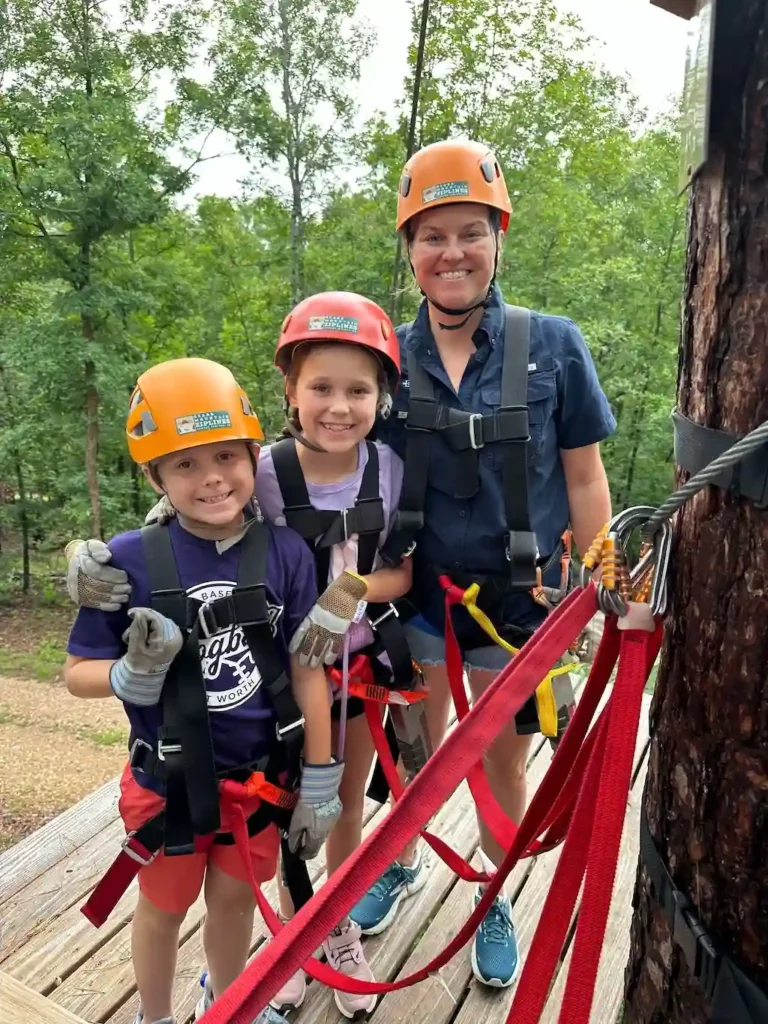
LK: In social work, self-care is something I considered long before it was trendy. It doesn’t do any good to burn myself out, because then I’m no help to anyone else. For me, self-care is traveling, just getting away a little bit. I love to explore the world and then I also love to come back home. Probably one of my favorite things about traveling is when we come back, and the kids go upstairs and just play; they’re happy to be back home.
DFWChild: Can you share any family travel tips?
LK: Start traveling when they’re young, when they’re immobile. Put them in the stroller and you’re off and going wherever you want to go. And remember kids are way more resilient than we give them credit for. They’ll be OK with something like a later bedtime. Go with the flow.
When my kids were little, I was a big fan of renting equipment, so I didn’t have to lug everything around. Now that they’re older, my rule is: If you can’t carry it, don’t bring it!
DFWChild: What’s been unexpected about parenting?
LK: It’s surprising how big of a part your kids play in your family unit. They are an active part of the family, it’s OK for them to have responsibilities and be expected to contribute. I didn’t realize how impactful it is to not just do for them but also have them know they play an important role in the family.
Lauren King’s 5 Tips for Raising Kids Who Care
1. Be Honest
The hardships of the world may feel like something we want to shield from our kids but acknowledging them helps children develop compassion and understanding. King’s tip: keep it simple. “Especially for younger kids, if they ask you about homelessness or what it means, keep it relatively literal. You can say, ‘They don’t have a place to sleep at night, or a room or a house like we go home to.’”
As kids get older, the conversation can evolve. Bigger kids might have more in-depth curiosity and even more questions. Don’t avoid their questions, but still keep answers simple and age appropriate. “Encourage them to ask questions and to not make assumptions,” says King.
2. Develop Empathy
How can we help kids feel empathy—rather than just sympathy—for people in need? Use examples in their own life. “You could say, ‘Hey do you remember when you had that bad morning the other day? You were kind of grumpy and maybe when you got to school your friends were asking you what’s wrong with you?’” says King. “The idea is that everyone has a story. You have a story to your life, and other people have a story to theirs. Try to help them understand that they may not know the whole story, and often there’s more there than they might realize.”
RELATED: How to Raise Kind, Empathetic Kids
3. Start Where You Are
If you’re looking for altruistic endeavors, start first with organizations that you’re already a part of. Does your church, school, sports team or recreational group have any service projects you can get involved in? King and her family attend Fort Worth’s Christian Church where her kids help out with things like making blankets or sorting food donations. “It’s something we do as a family,” she says.
4. Lead by Example
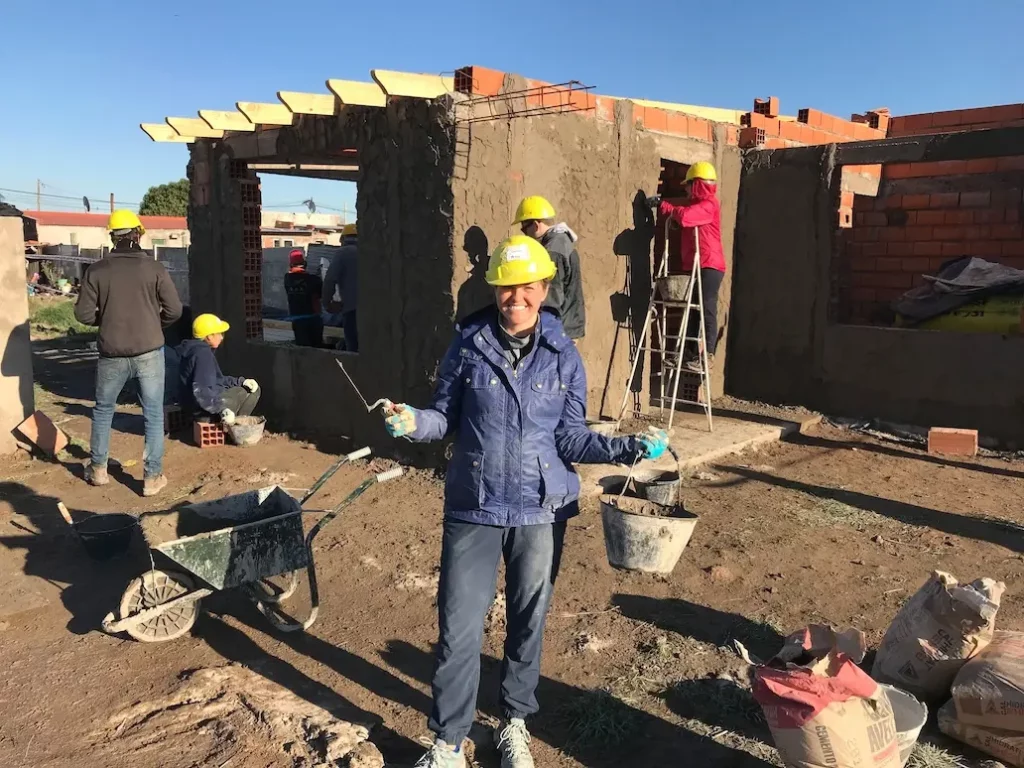
In 2018 King and her husband traveled with Habitat for Humanity to Bahia Blanca, Argentina, where they helped build a home for a single mother of two children, one with special needs. It was an “eye-opening” experience, King says, that the couple plans to do again, even though their kids are too young to join.
5. It’s Never Too Early
Many nonprofits have a minimum age to volunteer, but no kid is too young to give back. For littles who can’t actively volunteer, King recommends they host a drive. “Start with asking them questions about what they’re interested in. If they really care about animals right now, great, then look for a local animal shelter in need.” Just make sure to do a little research—find organizations in your area, then call to see what they actually need. “Then say to your kids, “Here’s the list they gave us of things that they need, what interests you most to collect?”
After the collection, bring the kiddos to drop things off. “A lot of times volunteer coordinators are great at making a big deal when kids contribute, thanking them and making sure they know its meaningful,” says King.
RELATED: Volunteer Opportunities For Kids in Dallas-Fort Worth
Top image courtesy of Rebekah Byrne